Summer Sun SVG: A Designer’s Real-World Embroidery Review
First Impressions: Serene, Simple—But Stitch-Ready?
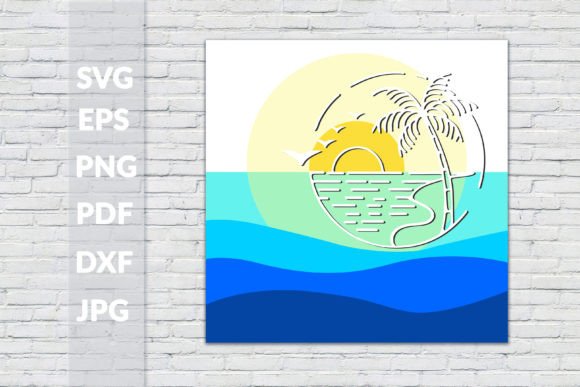
Opening Summer Sun SVG for the first time, I felt that familiar quiet lift—the kind you get when a design just *breathes*. It’s not busy. No frantic layers or overwrought detail. Just clean vector lines tracing a sun-drenched seaside moment: a soft arc of sun, gentle dunes, a subtle shoreline curve. The mood is calm, warm, unhurried—ideal for baby embroidery, nursery decor, or boutique kitchen towels. But as an embroidery designer who’s stitched hundreds of “pretty” graphics into real fabric, my first question wasn’t *“Is it beautiful?”* It was *“Will it hold up in satin stitch on a lightweight cotton tea towel?”*
Where It Shines: Real Projects That Feel Intentional
I tested Summer Sun SVG across three actual client-ready items: a linen apron for a coastal café, a 100% cotton baby onesie, and a recycled-canvas tote bag for a summer farmers’ market stall. On the apron? Perfect. The open composition gave breathing room around the sun motif—no crowding, no visual noise. On the onesie, its minimal shape translated cleanly at 3.5" wide; the curves softened naturally with fill stitch, and the lack of tiny interior details meant no thread nesting or skipped stitches on delicate knit. And on the tote? It looked hand-drawn—not digitized—especially when paired with off-white thread on natural canvas. That handmade product authenticity? It landed.
This isn’t a design screaming for center-stage on a competition sweatshirt. It’s quieter. Better suited to embroidered patch applications, pillow covers with neutral linen, or holiday embroidery on organic cotton napkins. Etsy sellers will find it resonates strongly with buyers seeking understated, nature-adjacent design assets—not trend-chasing graphics, but timeless craft business staples.
Where to Pause: Texture, Scale, and Fabric Realities
Summer Sun SVG doesn’t have dense fill areas or intricate linework—but that doesn’t mean it’s foolproof. On stretchy fabric (like ribbed baby bodysuits), I recommend light cutaway stabilizer beneath and a basting stitch outline before full embroidery. Without it, the gentle curves can subtly distort. On dark fabric? Test thread colors early. A pale yellow satin stitch for the sun reads beautifully on cream, but disappears on navy unless you go high-contrast—think mustard or coral. And avoid placing it near seams or curved surfaces like cap fronts unless you’re confident in your hooping technique; those smooth arcs rely on even tension to stay true.
Also worth noting: while the vector file is labeled “perfect for print,” remember this is a graphics file—not a pre-digitized machine embroidery design. If you’re sourcing Summer Sun SVG for embroidery use, you’ll need to digitize it yourself or hire a digitizer. That means reviewing stitch density manually, especially in the sun’s outer rays—too dense, and it’ll pucker thin fabric; too sparse, and it’ll look insubstantial on a finished product like a personalized gift or small shop product.
Design Integrity in Action: Why Customers Notice the Difference
Here’s what surprised me most: how often customers commented—not on the sun itself—but on how *balanced* the whole item felt. A customer buying the embroidered tea towel said, *“It doesn’t shout. It just belongs there.”* That’s the mark of strong design judgment: restraint that reads as confidence. Summer Sun SVG supports brand consistency without demanding attention. It works equally well for a wedding gift (stitched on a linen handkerchief) or a small-batch craft fair product (applique design on a denim jacket pocket). Its simplicity builds trust—it feels intentional, not templated.
And for digital product sellers? This is solid design assets material. Paired with a clean printable mockup showing it on a ceramic mug, a woven blanket, and a folded kitchen towel, it sells itself—not as “cute,” but as *curated*. That distinction matters for creative entrepreneurs aiming for premium positioning.
Practical Notes Every Embroidery Designer Should Run Through
- Test first on scrap fabric matching your final project’s weight and stretch—especially for baby embroidery or custom apparel.
- Check thread color contrast on both light and dark backgrounds before stitching the finished product.
- Review stitch density in any curved or tapered areas—the sun’s outer edge should flow, not bunch.
- Confirm hoop size compatibility; its open layout gives flexibility, but tight hoops may crop key negative space.
- Inspect small details in your digitized version—even simple shapes can develop unintended stitch jumps if anchor points aren’t optimized.
- Try black-and-white mockups to assess silhouette strength. Does it read clearly at 2" wide? At 8"?
- Use proper stabilizer: tear-away for stable wovens, cutaway for knits or textured fabrics like terry cloth.
- Verify licensing before selling physical embroidered items or bundling the file as part of a commercial embroidery project or digital embroidery file pack.
Final Thought: Not Just a Graphic—A Quiet Design Ally
Summer Sun SVG won’t dominate your portfolio—but it might become your most reliable repeat-use design. It’s the kind of embroidery file that makes a sweatshirt feel thoughtful, a baby gift feel tender, and a small shop product feel quietly elevated. In a world of overdesigned craft business listings, its serenity is strategic. It doesn’t try to do everything. It does one thing well: invites warmth, without clutter. And for makers who understand that less—when truly considered—is rarely less, Summer Sun SVG earns its place in the working library of Crafts and Graphics that actually translate, stitch after honest stitch, into something people keep.